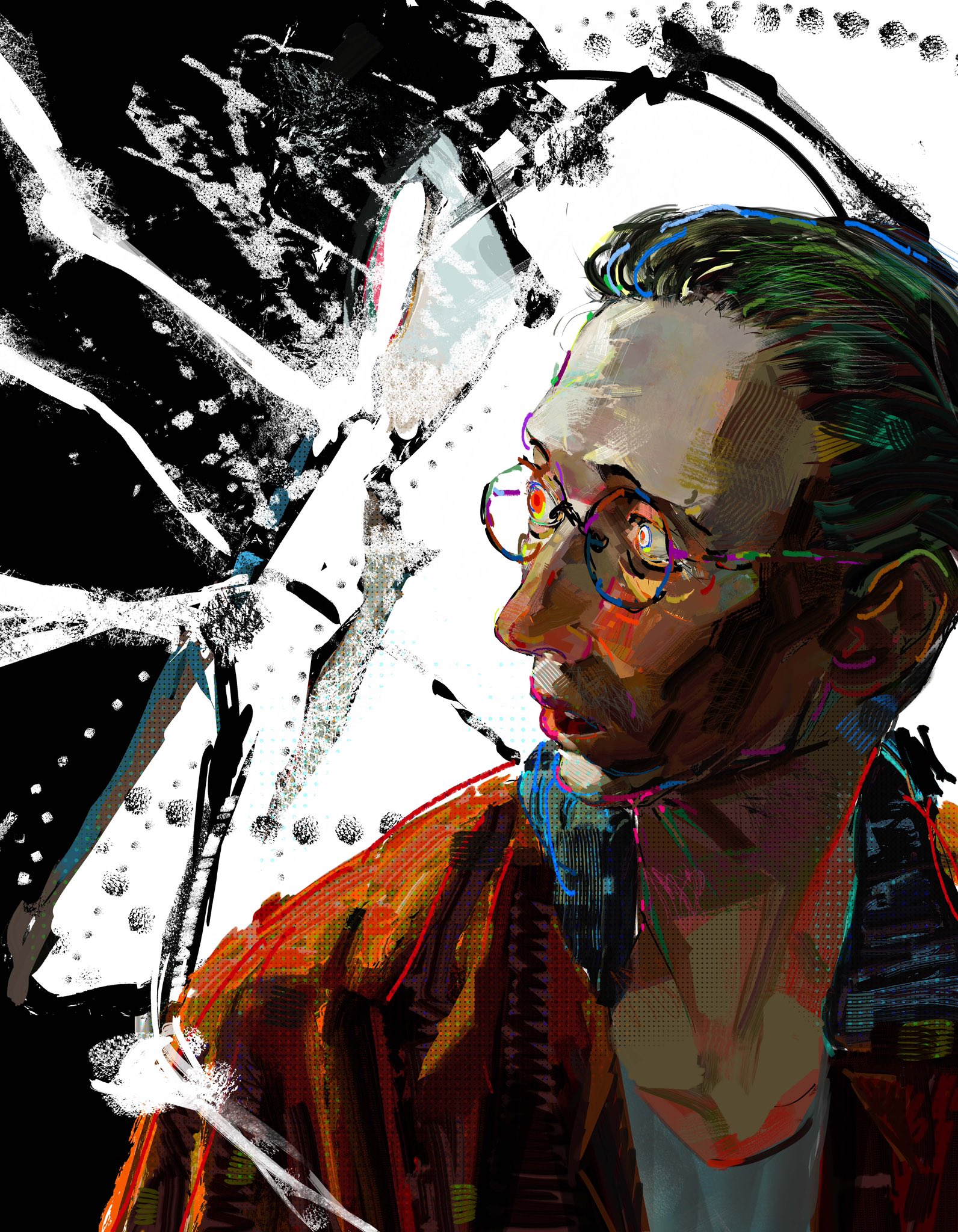
There is no greater generator of hopelessness and no better surfacer of futility than work which you despise. Becoming dependent on what you hate and possessing no exit is a bloodcurdling double-bind, where you must maintain the hurt as a compromise. It is a modern pact with the devil, an exchange of the soul for an extension on your lifestyle; we do not want to sacrifice what we’ve already achieved, especially if the road has been laborious, and we will tolerate all manner of tort and evil to an extent otherwise unpermitted if it came from anything or anyone else. Then, the whole is dressed as a virtue, with persistence in this insanity rewarded but never to satisfaction, and any detraction from this pursuit considered an ill that, even if alleged, threatens the very foundations of your life.
The solution is evident to everybody. If you were to care less about all that which we consider material, then you wouldn’t suffer as much through this. You could easily make the sacrifices that would lessen the crush of the press that undesired work puts between the temples of your skull. But then, at what cost? The nobility of poverty is a great poverty of nobility. How many friends you thought you had would come to dispossess you and wither away as your means did? What of those who aren’t exactly friends but have come to be pillars of your life that would remove themselves promptly from you if you were to be poorer? We all have in ourselves poor estimates of how strongly connected we are to others, and in this shy awareness arises the anxiety of being so off the mark that even whole friendships could be entirely situated on the careful balance of money and means, of social statuses and all the activities that nominally contributes to the formation of bonds. God forbid, God forbid, but a chance nonetheless.
Those who have come to build their selves entirely on their means cannot even ponder the future without them. They are easy to find; look for those that mention their titles more than they bring up their own names, who spend more time painting a corporate image than they do on detailing their hobbies and the projects that they pursue. They have come to wholly define themselves as their work, past and present; they do not exist outside of the shell of work, they are not full persons but human-pretending tendrils extending out of their employers, their curriculum, their resumes, the endless list of achievements they like to iterate upon when presenting themselves. They cease to exist when moved outside of the reference frame and turn into a utter nothingness.
All of these voids have been born human, but grund into nothing. The great soul crusher have come for them, squishing their minds into performing a formulaic bureaucracy of life at all times, devoid of all spontaneity. It is not entirely their fault that they have come to be this way, but there is fault in the maintenance of the nothing, in the willful and purposeful retention of the irrelevance of their lives when viewed at great scales. Think of the questions that others ask you when you are introduced, and how immediate the question of what you do comes. What is this question? How do you answer this question? Do you bring up your title, where you work? But why do you not bring up that which you do, outside of the confines of work? Why is it that the desk job and the laying of bricks defines you more than that which you peaceably enjoy, the multitudes of hobbies and what else that you do when you are given your allocated portion of freedom before and after work?
I visited a church and I’ve been asked this question several times as I’ve met its folk. The more I answered “I am Louka, I am a product manager, I live in Vancouver but moved from Québec for work, and I like to write!”, the more I’ve come to realize that the order of the answers here has been skewed in the most dehumanizing way. I haven’t been crushed to the point where my title comes before my own name, but that my position and my relocation comes before my homeland and what I like to do is an indicator of the tendrility that I’ve begun to realize is growing within me. Is this what I am? Is this what I resolve to, in the end? No, obviously not—we know that we are more than this, even if we cannot rationalize it or explain it in a manner concordant with our beliefs. By the time I met the few last people from the church, I’ve been answering that “I am Louka, a writer from Québec”…
…only to be faced with the astonishing tendrility of them assuming that it is a career, my work! I was taken aback as they asked where I worked as a writer, but I told them that it isn’t work, it is like what I like to do. They had to ask me specifically where I work to finally learn that I was a product manager, which produced far more interest than the writer-me, with follow-up questions as to my employer, where they are, and why I’ve relocated. That which you do, not that which you work, is always less interesting and much less an indicator of your character than what you have chosen to grind you into a soulless husk. I know of the intricacies of the social worth of work, I know of how work can reflect partly what you are; there is perhaps a matter of judgement in everyone’s choice of job, but none that should be ordered first in the definition of who you are.
Anticipated Memories
I have a childhood friend that, you know the kind, is an active imager of his food. All that which he orders ends up on his phone, uploaded somewhere else for the supposed enjoyment of others. He produces these in surprising quantities, too; a single trip often results in a hundred or so pictures of food. I stand horrified at even the mental image of the expense this all incurs to him. One time, I embarked with him on one of these sorties, and I found that he has quite the involved process, with a very mechanical approach to finding restaurants, looking at their menus, and choosing what’s worth his time.
The most interesting part however was the actual eating. While I bothered to eat what he has ordered for me, he ultimately ate little of what he himself ordered. It was a place with many little courses, and so he was often waiting for me to end my course as he took perhaps a few bites (when the size of the meal allowed for more than one!) and left it there. One could go and criticize the waste, but I was more annoyed at the futility of it as if you enjoy food to the extent he shows to others, why not eat any of it? I asked him this and he told me that what matters here is the image of the food, moreso than the food itself; he likes food, but as a tool, a means for display, less as an end, something to fill your stomach with.
This created utmost disgust in me, but in the same instant, an elucidation of something often noticed but little understood. Some people commit to hobbies almost entirely for the image it produces, and not necessarily for the enjoyment of its rituals or its outputs. This has coloured heavily my perception of others when, same as me, they express their hobbies more than they talk of their work as they define who they are, either when asked or on their profiles. Some, yes, truly do this because they identify more with the hobby than they do with their work, meaning they are fully human and have come to grasp with their sovereignty, their free agency. Most, however, I’ve found to care not as much for the execution of the hobby than for the ability to say and display that they’ve done it, that they are a partaker of a great skill or a great art.
It is fine to be proud of what you do, make no mistake. It is however ridiculous to think of your hobby mainly as a generator of prestige, with all the skills and experience merely prerequisites to its creation. Some even enjoy the process but would not enjoy it (or would avoid the hobby altogether!) as much if it didn’t yield some kind of social capital by the end of it. Unfortunately, when somebody mentions their obbies first as they define themselves, this is usually the case. Rare is the person that does this and truly loves the execution of the hobby, with no or little care given to its social rewards.
There is an even subtler kind of image adoration. Those who will say and truly believe that they love their hobby for its execution and not its social rewards, yet apparently live in the future always, the futurist. They display the same symptoms as of those who love only the image of the hobby; an endless taking of pictures is still present, for instance. They think that they truly love the hobby and does not see it for the prestige it generates, which is true to a point, but not completely true, and this can be demonstrated by investigating why they are so dedicated to, say, taking pictures. You will discover as I did that they live out their hobby as an anticipated memory; “I must make sure that I can remember and see this later!”, they think, ultimately taking away from the current and present experiencing of what they are doing.
It is in this regard that they are similar, and maybe even almost the same, as the imager, as the person that pursues an hobby exclusively for its image. It differs only in the intended target; the imager anticipates another viewing what he does for his social capital, while the futurist anticipates a memory that he will eventually see. Yet, both do the same thing in the moment, reducing their actual and true experience of their hobby. I have been lucky to fully avoid both personalities in myself, even though I’ve had moments where the imager has seen glimpses of the metaphorical sunlight of my mind; I have taken pictures thinking that someone else will eventually see it and think, “Wow, he did this!”, and this perversion of experience surfaces time and again, but I am now equipped with the understanding that it takes away from the fullness of life, and I no longer pursue this, and I encourage others to avoid it at all costs.
Therefore when one is quick to talk of his hobbies, you must be careful to perceive whether this is done for purposes of social capital, for purposes of anticipated memory, or because the person indeed loves the hobby. When it is done for purposes of social capital, it is exactly equivalent to speaking of one’s job as the foremost definition of the self, disguised only as something more hollistic and homegrown and grassroots and different, in a way that feels, arguably, sneakier and less honest and less in touch with honesty than simply telling others of your title. Ignorance is bliss and knowing this and refining your perception of this definitely reduces the bliss you have as you come to understand the social computation now done in announcing identity.